
















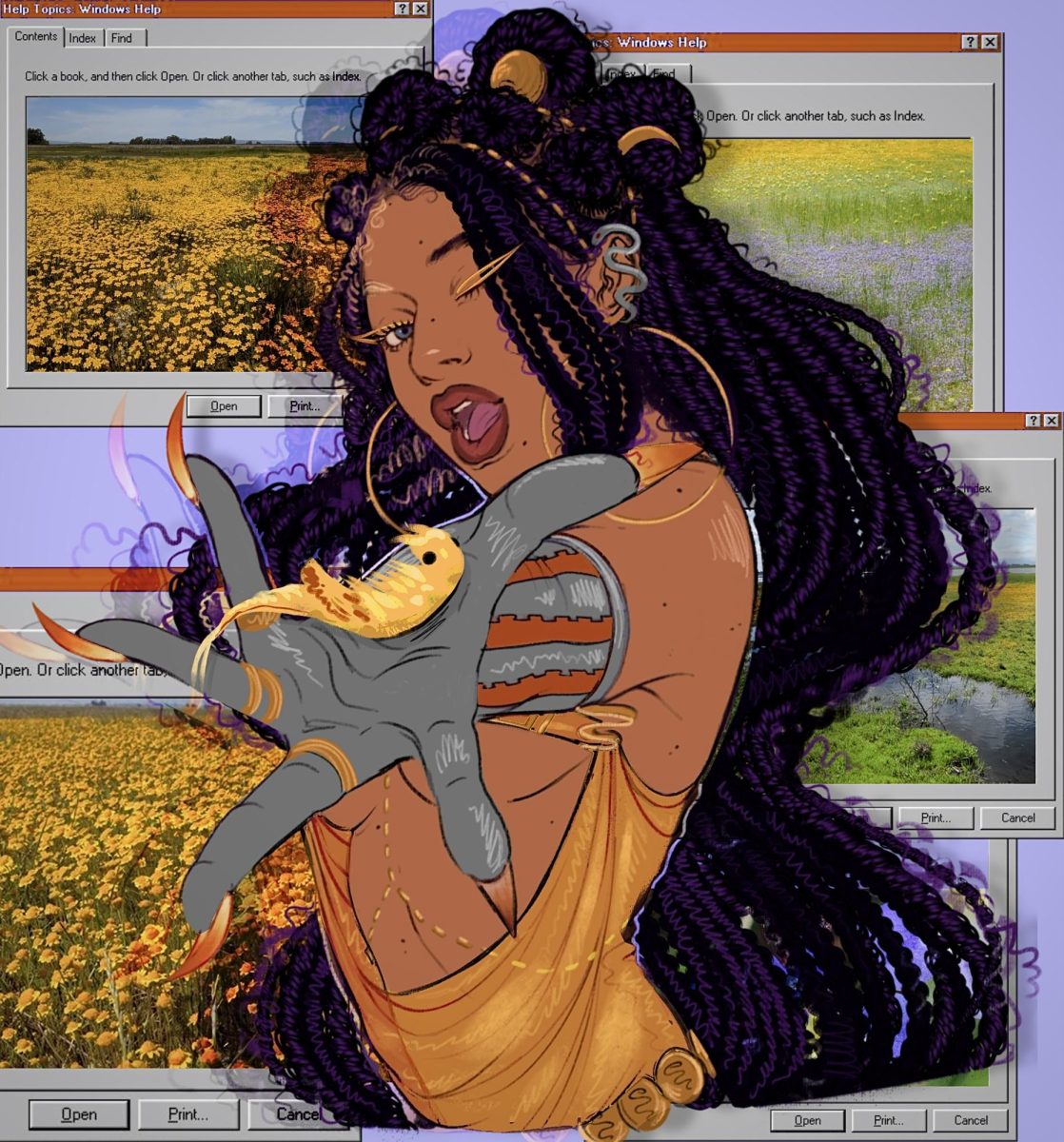
Note: The illustration above is not accurate to the size of the Vernal Pool Fairy Shrimp, nor is the color entirely accurate to all of its species. Do not handle these precious organisms unless you have a U.S. Fish and Wildlife Recovery permit.
As a kid, I loved the idea of fairies. Perhaps it stemmed from the Pixie Hollow craze of the late 2000’s, or maybe I’ve got the leprechaun project from kindergarten to thank. Either way, I know plenty of hotties can agree with me.
But let me preface this before we get too far in; real life fairies do not look like the ones from the Rainbow Magic series. You know how you thought sea monkeys were actual sea monkeys (probably caused by that one Phineas and Ferb episode)? Well, sea monkeys are actually fairies, and fairies are not baddies who control sunlight or plant growth.
They’re shrimp– but not the kind of shrimp you’re used to!
Today we will be exploring the wondrous world of who these little fairies actually are and their rapidly fading ecosystem called the vernal pool.
Vernal pools are temporary wetlands that fill with water in the winter and dry up when summer comes around. They’re often accompanied by the term ‘ephemeral’, which means short lasting. Sounds very fairy-like, does it not? Well, ‘vernal’ means ‘relating to spring’, which only adds on to the mystical nature of these grassland inhabitors.
Due to our peculiar climate and impenetrable clay layer, California and parts of Oregon are the primary regions for our very special vernal pools. Of course there’s Enchanted Rock in Texas, plus plenty of recorded pools in South Africa, Australia, Chile, etc., however our vernal pool basins are the most notable because of that Mediterranean climate I mentioned. Because of it, Cali is touted as the botanical hotspot of vernal pools. Don’t get it twisted though, pools can also exist in blue oak forests and strips of woodland leading into Canada. Our tempestuous California is just their main hangout spot!
Aside from their temporary existence, vernal pools are unique in the endemic life they sustain. Endemic means native to only that particular zone, which our fairies definitely are!
The little pixie friend we’ll be discussing is the aptly named Vernal Pool Fairy Shrimp!
Scientific name Branchinecta Lynchi, the Vernal Pool Fairy Shrimp cements itself as a California native who loves to dip her toes (swimming legs) into Oregon waters from time to time. Originally found across Shasta and San Benito, the U.S. Fish and Wildlife Service extended that region after conducting surveys that revealed 13 out of their 17 chosen vernal pools had our lovely little friend in them!
Vernal Pool Fairy Shrimp do not share the same appearance as the shrimp people are commonly acquainted with. Part of that is due to the difference in species.
Our freshwater friend lacks the hard shell most crustaceans are known for. Commercial Shrimp (Brown, White, and Pink Shrimp) are typically far bigger, about 1.5 to 9 inches compared to the fairy shrimp’s 0.12 to 1.5 inches.
Other key parts of their design include the yellow-orange translucence of their exterior and the eleven pairs of swimming legs they use to eat Protozoa, waste, and whatever else lingers within reach. Famously, these little guys swim upside down, gliding through the water with their backs.
The most prominent feature about these guys is their life cycle. Female fairy shrimp will carry a clutch of fertilized eggs (also called cysts) that end up at the bottom of dried waterbeds. The eggs utilize their hardened shell and enter a stage known as cryptobiosis to survive the oncoming dry season. During my research in the field I unfortunately did not get to see the shrimp, but I was told that’s because March is their big hatching period.
In 1994, the U.S. Fisheries and Wildlife labeled Vernal Pool Fairy Shrimp as a threatened species. Most of this comes from the usual over development and introduction of invasive species. While in the wild, Mosquito Fish and bullfrogs are the primary issue, the main factor to their endangerment is us.
“But what can I do?” You might be asking. And the simplest of answers is to just raise awareness to their existence.
Hidden in the canyons between Fairfield and Vacaville is a settlement called One Lake. This continuously growing neighborhood only exists due to the prairies and grasslands it takes over. Not too far away from it is the Jepson Prairie Preserve, which is one of the most famous spots for vernal pools. And in between both of those, is a Recology Landfill!
By speaking out against things like One Lake, sewer line implementations, agriculture developments, and more, you can stay in the loop regarding the conservation efforts of our lovely little fairy friends, as well as their natural predators and the local flora!
Most of this information was collected during an exploration of the Jepson Prairie Reserve during a Solano Land Trust collaboration with the Natural History of California class.