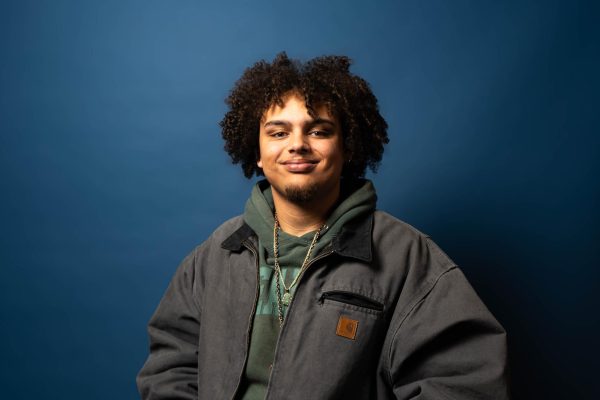







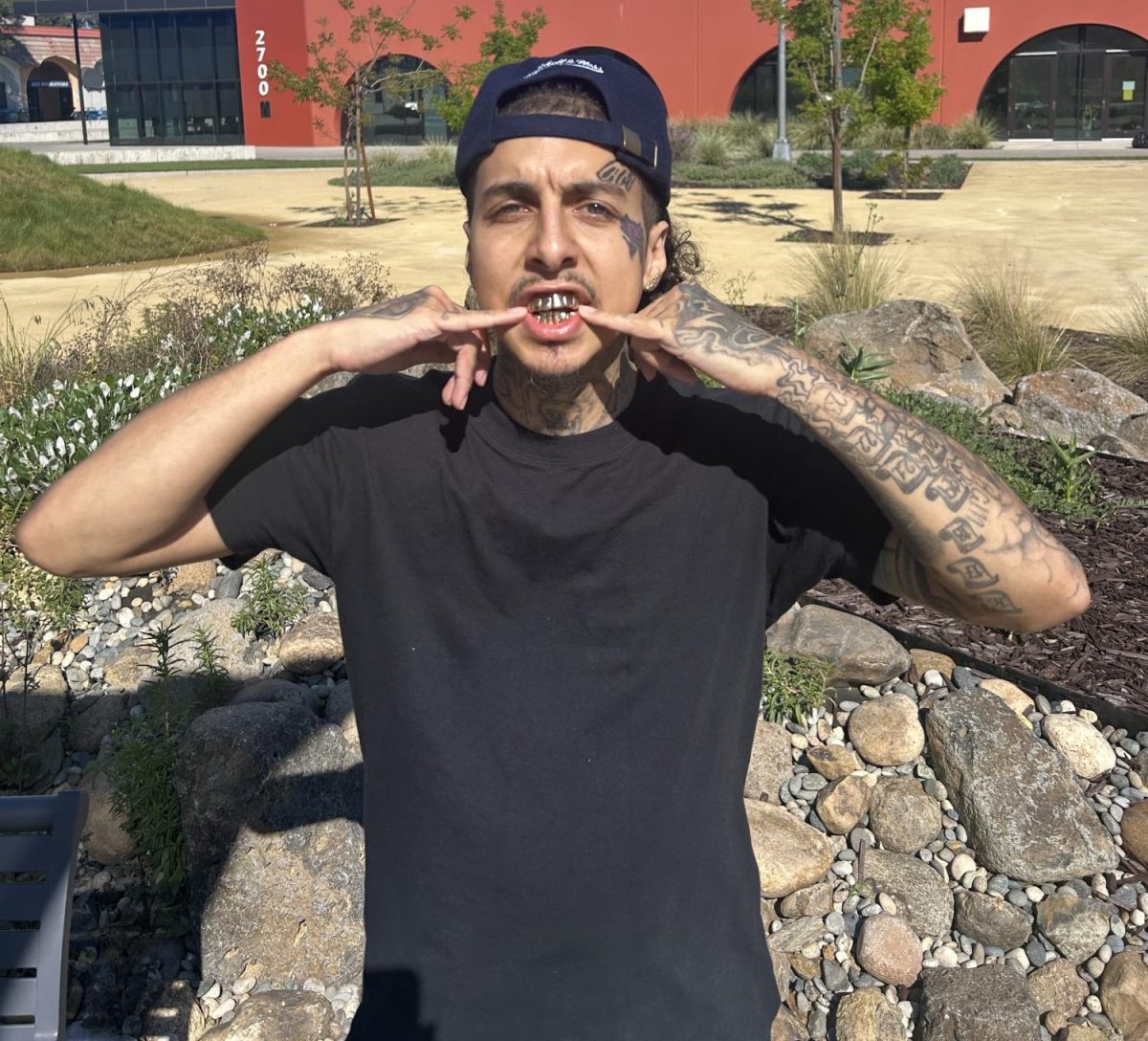



It’s 2015, and Joseph DaRosa is walking down the remote and quiet Lake Herman Road connecting East Vallejo to Benicia—the Zodiac’s old stomping grounds. He had just been shot and robbed by a childhood friend. Hills of dead grass enclosing him, DaRosa began walking towards a hospital.
For 45 minutes, it was just him, his wound, and the grazing cows in the fields, hobbling towards any chance of survival. Driving down the old farm road was his old high school classmate, who stopped & called out to DaRosa. The classmate sped him to Kaiser Permanente, where he would ultimately survive.
After this experience, DaRosa’s deep distrust of people calcified. “There are a lot of doors that I would never open for another human,” he said.
Given the traumatic experience of being robbed, shot, and left for dead, the Solano College Dance Production class students & instructors alike have been aiding DaRosa in his challenges with his internal uneasiness and discomfort towards others.
But even before joining SCC’s Dance program, dancing always served as both therapy and an escape for DaRosa.
DaRosa’s priority of choosing peace instead of perpetuating the chaos surrounding him was born during his nine years spent in prison due to gun violence. “When I stopped dancing, art was still my therapy…even during the whole prison term,” he expressed.
In a “fear-ran environment”, as he referred to prison in an interview he did with podcast Bay Affiliated earlier this year (which goes into more detail on his legal troubles), DaRosa resorted to writing raps and freestyling as a way to calm down and voice the frustrations that came with long-term imprisonment; but it was also a way to build respect inside.
“If I was stressed out, I’d write a song…the magnetism that comes from being an artist is huge…a lot of the respect and the friendships that I gained in there was because they were like ‘oh Ghandi (his old stage name) can really rap,” he said.
No amount of a nine-year prison sentence can really be considered “easy,” but DaRosa does believe that the outlet rap provided him helped his time inside a cell go much smoother than it would have been without it.
“It made it easier on me…in every way. In my mental health and also my connections and networking.”
DaRosa first opened the performing arts side of his life at the age of 13 in the Vallejo streets through turf dancing—a popular pop-locking and shoulder-rotating Bay Area street-dance form started in the early 2000s. “I was an old-school turf dancer. I was already dancing,” DaRosa said.
He used the wide reach of turf dancing in Vallejo at the time to build his early friendships and camaraderie amongst other dancers. “Dancing was how I made my first friends…people would be like ‘oh we dance too, let’s dance together,” he stated.
His early art roots were deepened and strengthened through the creation of the turfing crew to which he belonged: Keep It Active (K.I.A.)
“I used to go to ‘Frisco, dancing on Market with the little box out…just getting money.”
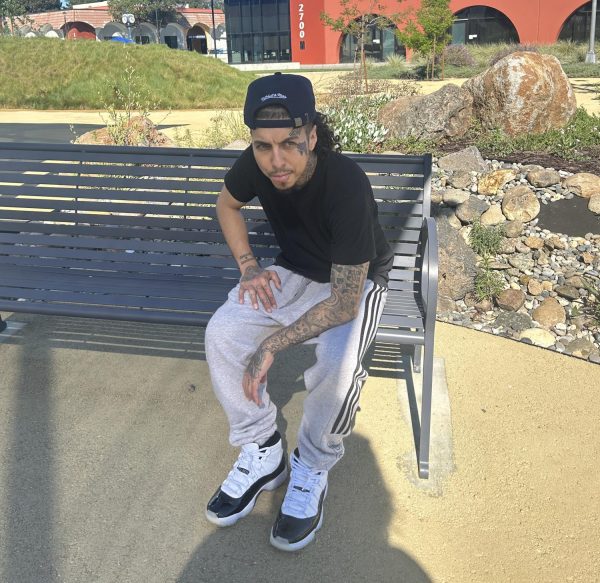
DaRosa performed in various battles with his K.I.A. crew across the Bay. It was during one of these battles that an altercation with another dancer occurred, which estranged DaRosa from dancing until recently.
“Dancing was a big part of my life, until there was this one guy from San Francisco. He came like he was trying to be a part of my crew and I was showing him my moves. We went to a major dance battle…and right before I go, he goes up and does my moves I just showed him that nobody knew,” he laid out.
Despite the momentum growing bigger and bigger, the feeling of betrayal and distrust drove a wedge between DaRosa and dance, like separating a patient from his doctor.
“I had been dancing for four years consistently, I was becoming a name,” DaRosa admitted. “I just quit. I literally just quit…I shouldn’t have done that, I could have made more.”
After a 19-year hiatus, and due to some involuntary external factors, DaRosa is back on the dance floor, now at Solano College. He originally wanted to take Hip Hop dance this spring, a class that isn’t available this semester. Despite not being his first choice, DaRosa’s happy with the challenge and unfamiliarity the Dance Production class brings.
“It’s been a treat, though, to have to get out of my character and do things that I would never do…Hip Hop dance would’ve been easy for me. [dance production] is cool because it’s not easy,” he explained.
During the talk about current projects and work in the Dance Production class, DaRosa brought up the upcoming Dance Festival at the Solano campus on May 8.
The festival’s coming complete with “a plethora of dance routines” practiced throughout this semester.
DaRosa also mentioned the scope of the attendance, which includes dance programs other than the one he’s in, such as performing arts schools in Vallejo and other surrounding Solano communities.
Back in February, DaRosa and the dance program were in attendance at the California Dance Education Association’s Conference at CSU East Bay. “Enriching” discussions and movement workshops were available to both students and instructors.
Candidly, DaRosa stated that he almost didn’t go to the conference, but was elated to have gone, especially after seeing what it meant to his dance instructor, Professor Ginger Cain.

DaRosa has a deep affection for his professor, as he feels like she genuinely wants him to succeed and cares about him, even through the mistakes he’ll own up to.
“I just see the love that she gives me. I missed a couple classes but she’d give me some lee-way because she believes in me. But I told her I’m gonna stop missing class.”
Professor Cain spoke of her student and the importance of his attendance at the Conference, stating that watching him take initiative and “embrace the opportunity” the College and the Dance program offered was “wonderful.”
“Everyone was so supportive and nice, something that [DaRosa] doesn’t often experience…being a dance educator, I know how exciting it is to attend a conference of this nature and so proud of Joe for trying something new, getting involved and connecting with others through the experience… It was so fun watching him do spoken words and dance movements. He did a great job,” Cain said.
DaRosa was pleasantly surprised by what the Conference had to offer him, emotionally and mentally.
“People accept me easily. Women’s parents, my friends, and their parents, very likeable…seeing how the dance community reacted to me and how much they loved me and wanted me to come back, it was a good feeling. That’s what every human needs, acceptance,” Darosa said.
The Solano Community College’s Dance production class has given DaRosa another path to dancing and a close-knit community, but there’s one last thing the class has to offer in the eyes of DaRosa: Discipline.
According to DaRosa, the lifestyle he was living away from dance doesn’t offer too many opportunities to strengthen his self-discipline, since a lot of his life was primarily based on survival, living in almost constant fight-or-flight.
“When you’re in the streets, a lot of times you’re there for yourself. You’re not looking out for nobody else,” he stated.
Having people to “show up” while not being able to miss class without disrupting the collective plan for the semester routines is the exact self-improvement boost Darosa was looking for.