





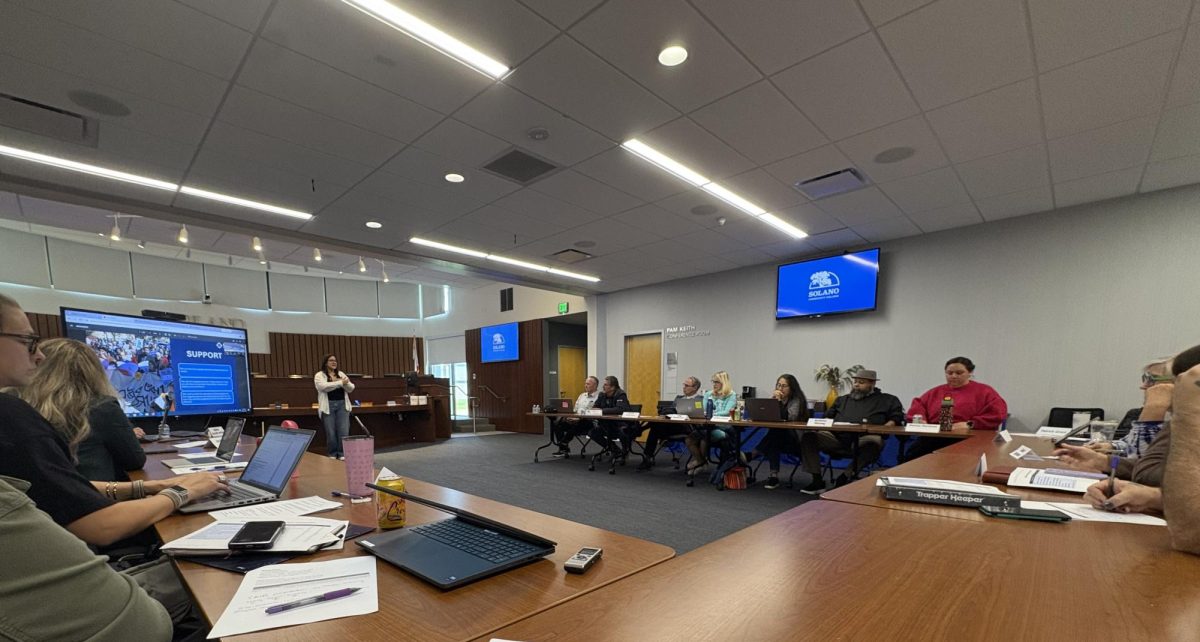



A Ramadan Iftar dinner was held on March 17 at the Vallejo Center, where attendees came together and broke their fasts. The event invited students, staff, faculty and community members to “gather in reflection, conversation and community,” and was organized by Dreamers Liaison Yusra Ghaleb.
The event began with words from Sheikh Khwaja Omar, guest speaker, SCC student and member of the Islamic Center of Vallejo. Shortly before sunset, Omar gave an explanation of what Ramadan is and its significance in Islam.
“It’s not just about fasting and stopping ourselves from eating and drinking, intake physically. Rather, there’s also an emphasis on spiritual intake,” Omar said.
“That’s one of the main objectives in the month of Ramadan, that a person not only abstains from food, not only abstains from drink, but he watches himself, he’s more conscious of himself, … more aware of god, more aware of his commands.”
At sunset, the adhan (call to prayer) was recited, and attendees observing Ramadan gathered to pray. The Maghrib, which translates to “the west” or “sunset,” is the fourth mandatory prayer of the day, and is prayed immediately or shortly after sunset.
Dinner was catered by M’s Halal Mediterranean Food from Fairfield. After the short prayer, attendees were invited to serve themselves.
Ghaleb later expanded on the significance of fasting during Ramadan.
“It’s supposed to allow us to empathize with the folks who don’t have what we have, whether they’re lacking food, whether they’re lacking shelter, whether they’re lacking connection … it’s really to humble ourselves,” Ghaleb said.
Ghaleb also talked about more events like the Iftar dinner being planned, but emphasized the distinctness between being Muslim and being Arab.
“My boss and I, Dean Heather Watson-Perez, we’re thinking of doing some things for Arab American Heritage Month, which is actually in April. It’s very important to acknowledge that being Muslim and being Arab are two different things. Folks can be Arab and Muslim, … Muslim and not Arab, or be Arab and not Muslim,” said Ghaleb.
Omar said “Absolutely, I feel like there should be more,” when asked if there should be more events like the Ramadan Iftar dinner.
“In this time and age, this is very important, to open up our minds and share with one another about our cultures and thoughts and views.”